Mobile development · iOS & Android

Mobile products
made for the real world.

From the first product decision to the last store submission, we design and build mobile experiences that work beautifully when real life gets complicated.

Product strategyUX & engineeringLaunch & evolution
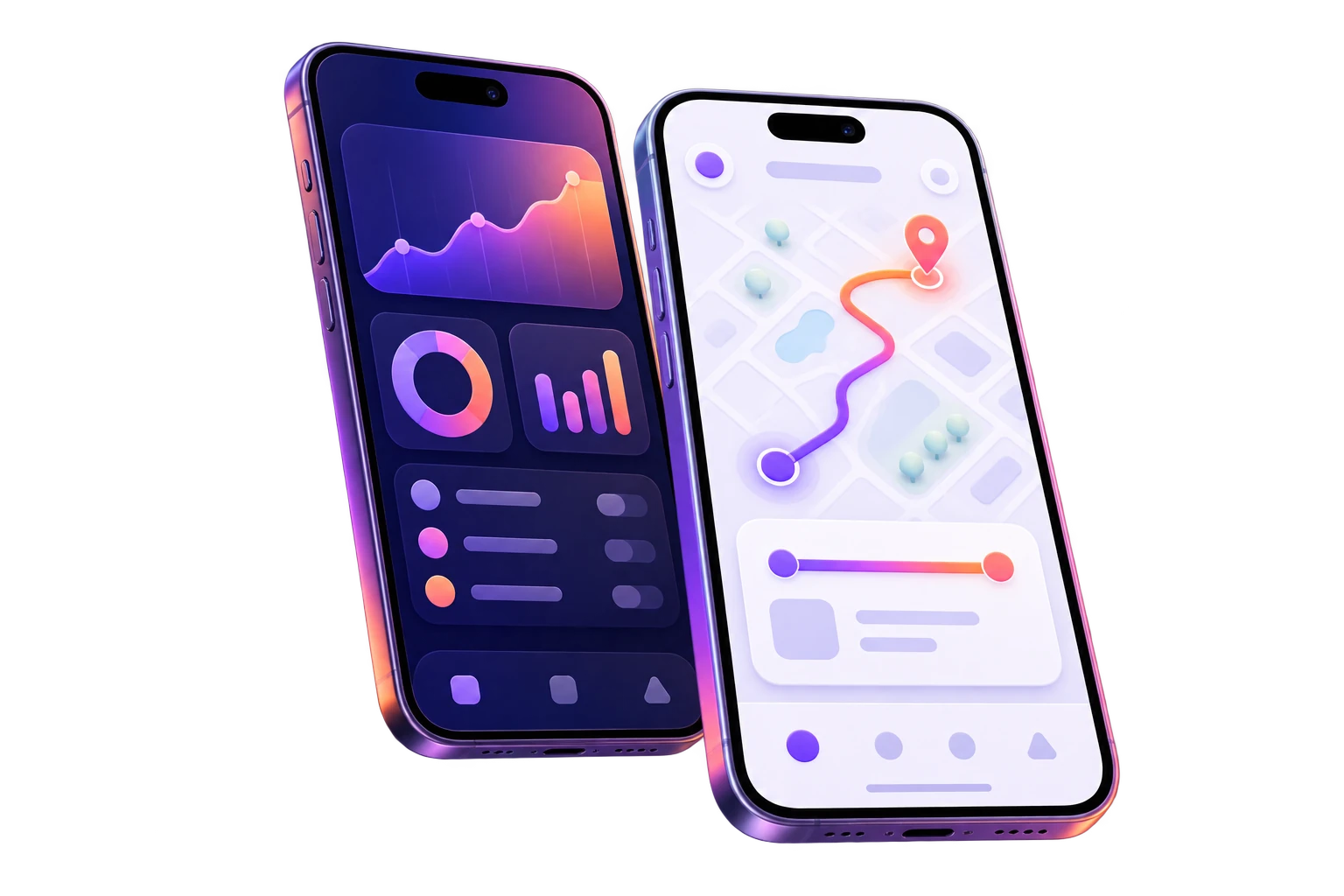
Two illustrative three-dimensional mobile product interfaces
Design through delivery

Designed for the moment of use

A useful app keeps the work moving.

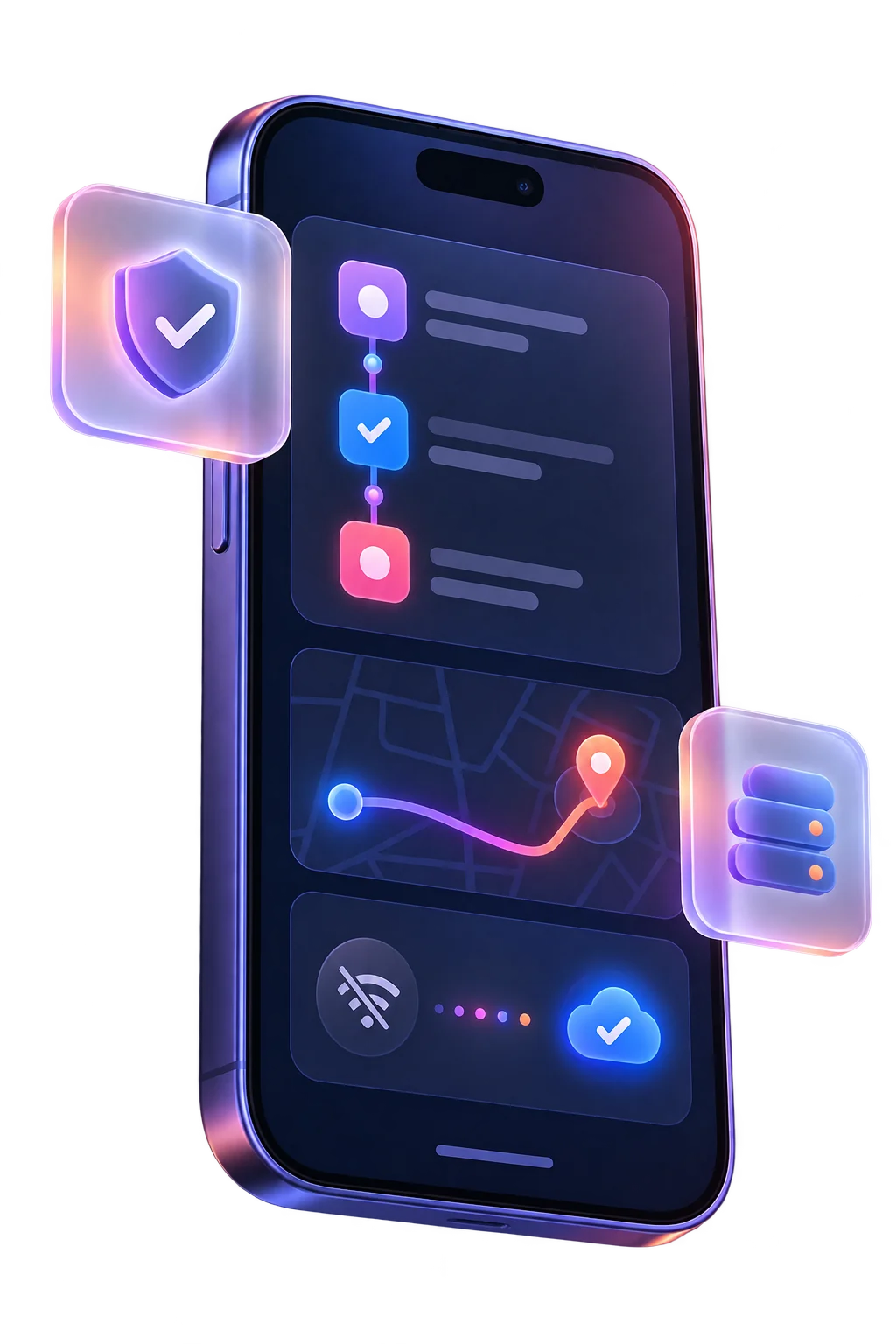
A polished screen is only the beginning. We map what people need to do, what can interrupt them and how the product should respond. Here is one illustrative field-workflow scenario.

01

The task is clear

The next action, relevant information and destination are easy to find without hunting through menus.

02

The connection drops

If offline use is in scope, the app explains what is saved locally and what still needs to sync.

03

The work is reconciled

When connectivity returns, the user sees a clear state instead of wondering whether their action was lost.

ILLUSTRATIVE PRODUCT SCENARIO
Illustrative mobile workflow with task, route and offline sync cues
Experience · Data · ReliabilityConcept visual, not a shipped screen

Selected work · Olloyo

One service. Three distinct mobile journeys.

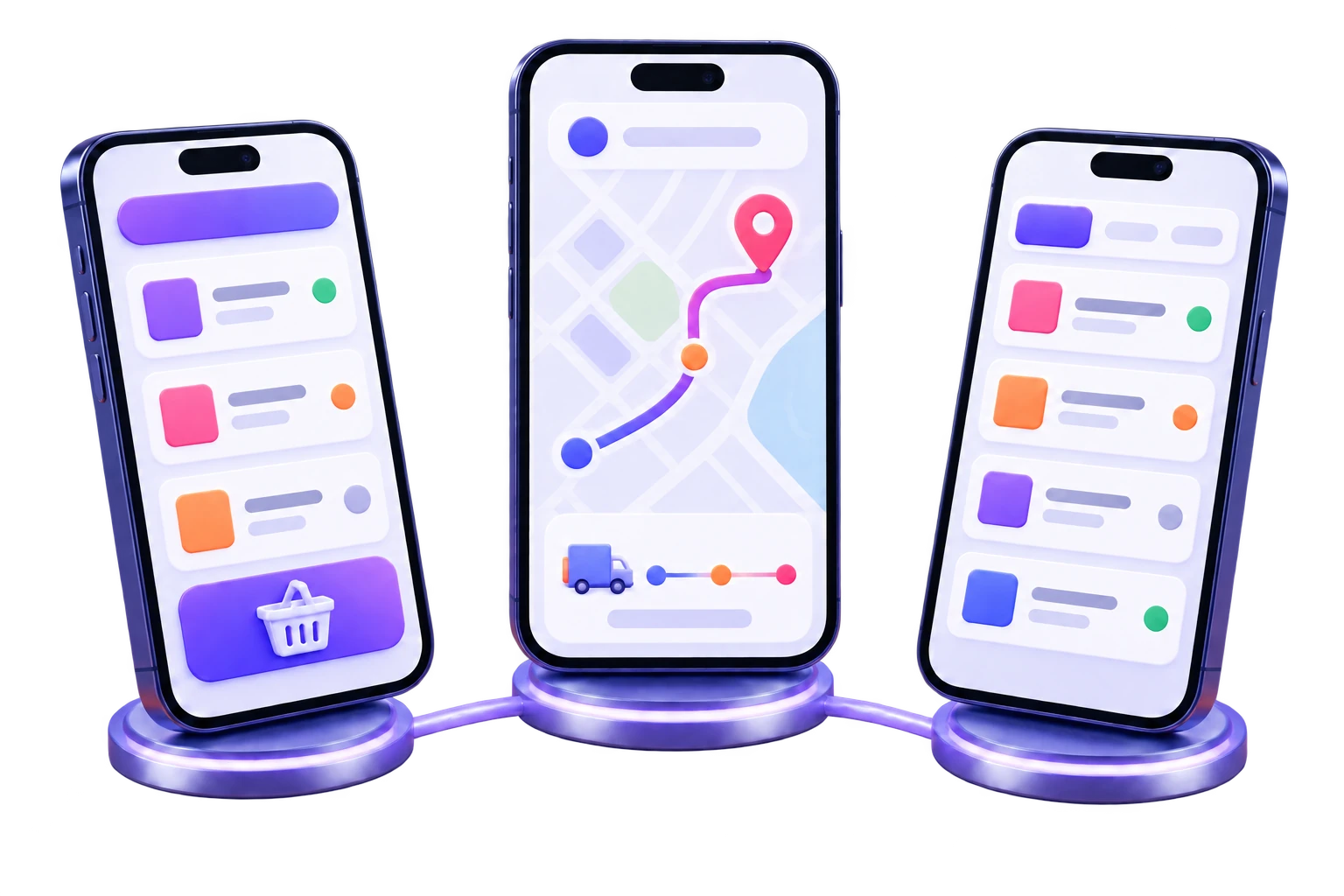
The Olloyo delivery-platform engagement brought customer ordering, courier logistics and vendor operations together around one service. Each user needed a different experience; the product needed a coherent system underneath.

Three illustrative applications for customer, courier and vendor experiences

Concept illustration. Not an actual product screenshot.

01

Customer experience

Find, order and follow the delivery.

02

Courier workflow

Move through pickup, route and handoff tasks.

03

Vendor operations

Handle the incoming order queue and catalogue.

This visual explains the three roles and does not depict measured performance.

What goes into the product

The visible experience and the invisible work behind it.

These are the decisions that make a mobile product useful after the first impression. The exact features and deliverables are defined in your proposal.

01 / 03

Make the next action obvious.

We turn user journeys into clear screens, useful feedback and recoverable states. Design work covers the moments between the polished screens, too.

  • User flows and clickable prototypes
  • Responsive interaction and accessibility states
  • Design and product files your team can keep using
FindConfirmFollow
NEXT ACTIONReview your requestEverything needed for the decision, in one place.
Continue
Clear stateFeedback after every action

Illustrative UI, not a product screenshot.

02 / 03

Connect the app to the real operation.

Mobile experiences depend on data, payments, notifications and the systems already running your business. We design the handoffs and failure states deliberately.

  • API and backend integration
  • Permission, notification and deep-link planning
  • Offline behaviour and sync where the work requires it
ONE CONNECTED PRODUCT
Mobile app
API & data
Business tools
Useful error states
Reliable handoffs

Illustrative UI, not a product screenshot.

03 / 03

Ship with a handover, not a mystery.

A good launch includes device checks, release materials and a clear ownership plan. We agree review points and leave the product in a state your team can work with.

  • Testable builds and device review
  • Store-submission support when included in scope
  • Code, access and next-step documentation
Release readiness
Product reviewFlows and edge cases checked
Device testingReal-device feedback captured
Ownership handoverAccess, files and next steps organised

Illustrative UI, not a product screenshot.

Choosing the right route

The platform follows the product.

There is no universal winner. We compare reach, device requirements, team capacity and the longer-term cost before recommending a build approach.

01

Cross-platform

One shared foundation for iOS and Android when journeys and features largely overlap.

A good fit when

You need two store experiences with a coordinated product rhythm.

Consider

Specialist hardware or unusually platform-specific UI may need native work.

React Native · Expo · Flutter
02

Native

Platform-specific iOS and Android builds when device capabilities are central to the experience.

A good fit when

You rely on deeper hardware integration or highly tailored platform behaviour.

Consider

Two codebases can require more development and maintenance effort.

Swift · SwiftUI · Kotlin
03

Progressive web app

A link-first product when install friction matters more than store distribution.

A good fit when

A focused workflow or early release benefits from instant access.

Consider

Browser and operating-system capabilities vary; requirements need testing.

Web · Offline cache · APIs

We make the recommendation during discovery; these are decision guides, not fixed packages.

A visible path to launch

Four stages. Clear decisions at each one.

The sequence is clear; the timing is scoped to your product. You see tangible work and make decisions before the next stage begins.

01 / 04

Discover

Understand users, operational constraints and the right first release.

Output: scope & priorities
02 / 04

Design

Map journeys, prototype key interactions and review the direction.

Output: reviewable prototype
03 / 04

Build & test

Develop in reviewable increments and test on real devices.

Output: testable builds
04 / 04

Release & hand over

Prepare the agreed store release and organise ownership for what follows.

Output: release & ownership plan
THE HANDOVER MATTERS

A product your team can keep moving.

Code and build access, design files, release materials and next-step documentation are defined in scope and organised for the people who will own the product.

Ways to work together

Start from the product you have.

Every proposal is scoped to the work, not sold as a generic app package. These are three practical ways to begin.

02 / GROWING PRODUCT

Ongoing product partner

Set a review and delivery rhythm for features, quality work and future releases.

Prioritised roadmapAgreed review and release cadence
Talk through the scope
03 / EXISTING APP

Takeover & recovery

Understand the codebase and release path first, then agree what to fix or extend.

Codebase and release auditPractical stabilisation plan
Talk through the scope

Good questions, clear answers

Before we start building.

The details matter. Here are the questions we would want answered before committing to a mobile project.

Do I need native apps or a cross-platform build?

That depends on device features, the user experience, the existing team and the roadmap. We review the trade-offs during discovery and recommend the route that best fits your product.

Can you work with our existing backend?

Yes. We can integrate with existing APIs and systems, or include new backend work in the agreed scope when it is needed.

What if the app needs to work offline?

We plan offline flows explicitly: what remains available, what is stored locally and how data should sync or resolve conflicts when connectivity returns.

Will you publish to the App Store and Google Play?

Store preparation and submission support can be included. Your organisation should own the developer accounts; the exact release responsibilities are written into the proposal.

How do we review progress during development?

We agree review points and provide testable builds at the cadence appropriate to the project. The plan is set in the brief, rather than promising the same week-by-week schedule for every app.

Can you take over an app another team built?

Yes. We begin with a codebase, dependencies and release-pipeline review so we can establish a reliable baseline before proposing changes.
What could your app become?

Let's make the next product decision a good one.

Tell us what you are building, what is already in place and where the uncertainty is. We will shape a sensible route from there.

Discuss your app